Latest News

Latest News

Will Driverless Vehicles Create a Better Future?

Will Driverless Vehicles Create a Better Future?

by Daniel Sperling

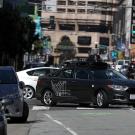
Maybe you use Zipcar, Lyft or Uber or know someone who does. You’ve probably seen a few electric vehicles on the streets. And you’ve undoubtedly heard and read stories about self-driving cars coming soon and changing everything.

Determining the Feasibility of Shared Mobility Services in Low-Income, Rural Areas

Determining the Feasibility of Shared Mobility Services in Low-Income, Rural Areas

by Ryan McCauley

While new mobility options have proliferated rapidly, their effects have not spread evenly across the country. And at a recent workshop called Pooling and Pricing: Harnessing the 3 Revolutions to Solve Congestion, Climate Change, and Social Equity, officials discussed how to further shift toward shared mobility.

Is the Uber phenomenon killing transit in Sacramento?

Is the Uber phenomenon killing transit in Sacramento?

By Tony Bizjak

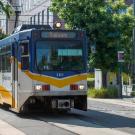
SacRT has been losing ridership almost annually for seven years – a 30 percent decline since 2010. American Public Transit Association data show that transit ridership is dwindling in most other cities as well.

Dan Sperling, founder and head of the Institute of Transportation Studies at UC Davis, who is writing a book about revolutions in transportation, says public transit in America is at a pivotal juncture.

Combining 3 Vehicle Technologies Could Nearly Eliminate Auto Emissions

Combining 3 Vehicle Technologies Could Nearly Eliminate Auto Emissions

By Camille von Kaenel

The auto industry and researchers say this utopian view of transportation is on the horizon, and it could cut nearly all of the carbon emissions from the transportation sector. Maybe.

Report Says Shared Mobility Key to a Better Future

Report Says Shared Mobility Key to a Better Future

By Alan Harman

An electric and driverless transportation system could improve livability and eventually save trillions of dollars a year, but University of California at Davis researchers say it won’t happen without shared mobility.

A UC-Davis report, prepared with the New York-based Institute for Transportation & Development Policy, says a shared, electric and driverless transportation system could reduce urban transportation carbon-dioxide emissions by 80% or more worldwide by 2050.

The Self-Driving Dilemma

The Self-Driving Dilemma

By Andrew Small

But the dream of cheap, clean mobility in cities might run up against some harsh realities—soaring energy consumption, supercharged sprawl, and intensified traffic congestion—if AVs are simply deployed to encourage more driving.

Survey: Future Car is Driverless, Shared, Electric

Survey: Future Car is Driverless, Shared, Electric

By Body Shop Business Staff Writers

If the future plays out the way transportation experts predict it will, autonomous, zero-emissions vehicles will dominate the roads, and none of the passengers will own the vehicles.

That’s a bit of an exaggeration, but experts see the nation shifting toward shared, electric and autonomous vehicles nevertheless, according to a survey by the Institute of Transportation Studies at UC Davis (ITS-Davis).

RoboTaxis Will Be Commonplace By 2040

RoboTaxis Will Be Commonplace By 2040

By John LeSage

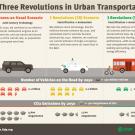
The Institute of Transportation Studies at the University of California-Davis just released results of a survey in conjunction with a new policy initiative,“Three Revolutions: Sharing, Electrification and Automation.” The survey was taken by 40 policymakers, researchers, and representatives from government, nonprofit organizations, and the automotive and technology industries.

Future Vehicles Will Be Electric, Shared and Driverless, According to Major Study

Future Vehicles Will Be Electric, Shared and Driverless, According to Major Study

By Douglas A. McIntyre

In the future, vehicles will be “shared, electric and automated,” according to a new study from the Institute of Transportation Studies at University of California, Davis. This trend gives an edge to companies currently employing one or more of these features. That list includes Google, Tesla, Uber and General Motors.